Tips, tools, and info to help you make smart and healthy choices
A library of resources to empower you with knowledge about what you’re eating in order to make informed choices.

No matter where you are in your journey, we got you.
Your Search Results
What’s Inside:
The free challenge guide includes:
- A complete three-day meal plan with breakfast, a morning snack, lunch, and dinner
- A categorized grocery list with suggested non-UPF products
- Recipes with preparation instructions, serving sizes, and nutrition information
- Leftovers built into the plan to help reduce cooking time and food waste
- A consumer guide explaining how to identify ultra-processed foods by reading ingredient lists
- Examples comparing UPF and non-UPF options in common grocery categories
Meals include familiar options such as overnight oats, egg sandwiches, spaghetti and salad, chicken with mushrooms and sweet potato, and salmon with asparagus and rice.
Learn What to Look For
The challenge is designed to be more than a three-day meal plan. It can also help you build skills you can continue using when you shop.
The guide shows you how to look beyond front-of-package claims and examine ingredient lists for common signs of ultra-processing, including cosmetic additives and ingredients rarely used in home cooking.
Ready to Try It?
Start the Three-Day No-UPF Challenge
About EatLove
EatLove takes the stress and guesswork out of healthy eating. Powered by its Nutrition Intelligence® engine and trusted by over 10,000 healthcare professionals, EatLove helps you build better daily habits. Whether you want to cut back on ultra-processed foods or manage a health condition, EatLove turns complex goals into clear steps with personalized meal plans, dietitian approved recipes, automated grocery lists, and food logging.
Three-Day No-UPF Challenge
Want to eat fewer ultra-processed foods but aren’t sure where to begin? EatLove and Fed UP! have planned three full days for you, complete with meals, recipes, a grocery list, and a guide to help you identify UPFs.
What’s Inside
Unjunked combines rigorous research with an approachable, real-world perspective.
Readers can expect:
· Research made understandable: Clear explanations of new studies and what the findings actually mean.
· A closer look at the food environment: Insight into how food companies, their marketing and product formulation practices, and public policy influence what we eat.
· Practical guidance: Research-informed ideas for making healthier choices without expecting families to navigate the food system perfectly.
· A scientific perspective on the headlines: Context to help readers sort through conflicting nutrition advice, trends, and claims.
Posts have explored how to recognize ultra-processed foods from ingredient lists, why some foods may be more addictive than others, and how to make sense of food labels and nutrition claims.
Unjunked: Pulling Back the Curtain on the Food Industry
Unjunked translates the latest science on ultra-processed foods into clear, practical guidance for everyday life.
What's Inside
This two-page PDF is one that you can download and have on your devices as a reference, or even print out and put up on your refrigerator as a reminder to your entire household to get in on the decision making.
Is this product ultra-processed?
Yuka’s decision tree is a simple, science-based guide designed for the general public. Through a few key questions, it helps consumers read ingredient lists more carefully and identify markers that may indicate a food is ultra-processed.
What's Inside
Think about the last time you watched a sport on TV or went to see your favorite team in an arena. Were you surprised to see Big Soda branding everywhere? It’s not a coincidence. Big Soda has been sponsoring the world’s leading sporting events for decades, using the spirit of teamwork, athleticism and exercise to sportswash the health and environmental harms of its products.
To learn more about how these marketing strategies are harmful to our health, visit Kick Out Big Soda's landing page and download their Fact Sheet. It's equal parts facts and sources.
Experts are raising concerns about how beverage companies design and market these products to encourage both kids and adults to keep drinking more. Kick Big Soda Out highlights the growing health impact of sugary drinks and why this issue matters.
Take Action
- Learn More About Sweetened Beverages
Explore the growing health impact of sugary drinks and their role in the broader ultra-processed food crisis. - Dive Into the Facts
Read the Fact Sheet to learn more about the health harms, industry tactics, and research behind sweetened beverages and sports sponsorships. - Join the Movement
Support efforts to push sports organizations to drop sweetened beverage sponsors and choose partners that promote health by signing up to Kick Big Soda Out.
Kick Big Soda Out highlights the health harms of sweetened beverages
Get a deeper dive on how Big Soda influences sports and why it matters. Download the 10 page Fact Sheet to learn more.
What's Inside
In this roundup, FoodFight USA has recommendations for 5 food scanning apps you can add to your phone right now:
- Yuka
- EWG Healthy Living
- GoCoCo
- ZOE
- WISECode
Check out the full listing to get more app details from FoodFight USA partners.
FoodFight USA’s List of Food Scanning Apps
Food Fight USA's list of food scanning apps can help you on your way to making healthier choices at checkout.
What's Inside
In this video, Dr. Chris van Tulleken breaks down a science-backed approach to reducing UPFs in your diet in 5 ways:
- Read the ingredients
- Keep on eating ultra-processed foods
- Don’t worry about fat, salt and sugar
- Learn how the additives affect your health
- What can you do about it?
If items 2 and 3 seem confusing, that’s because there’s more logic and science to it than simply following the above instructions. Watch the full video to be fully informed about these approaches.
UPF Detox
5 science-backed ways to reduce UPFs in your diet
What's Inside
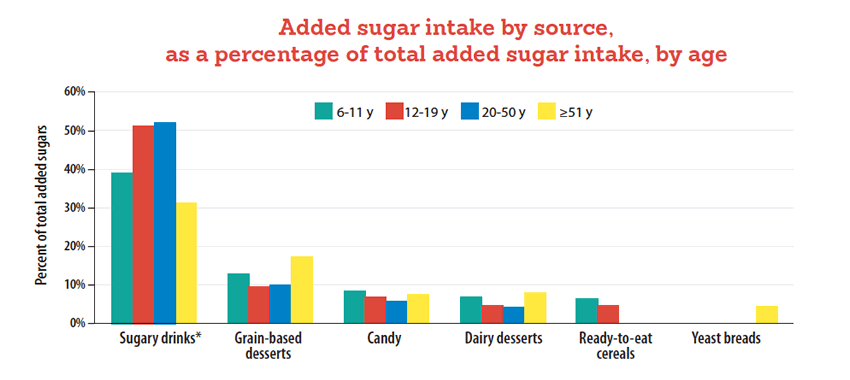
This toolkit contains chapters loaded with statistics and data showing how added sugars in processed foods drive the US obesity epidemic and cause major health issues like type 2 diabetes and heart disease. While American sugar consumption is slowly declining, it remains dangerously high, with sugary drinks being the primary source.
The Overview contains compelling charts like this one and many more:
The Reducing Sugar Exposure chapter touches on six key policy approaches that can make a difference in our communities.
The Sugary Drinks chapter covers what defines them and why they are uniquely harmful, particularly for children.
The Not Just for Drinks chapter covers other sugary culprits like Kids Meals and Institutional dining such as at hospitals and public schools.
The Changing Industry chapter focuses on ways we can reform industry practices and explores limits on marketing to kids and product reformulation.
Check out the full toolkit for a deeper dive on Healthy Food America’s website.
Knock sugar back to healthy levels
UPF sugary-sweetened beverages and added sweeteners are a major contributor to chronic illness. Learn more about how sugar consumption impacts health and what you can do to limit the health risk with Healthy Food America’s Sugar Advocacy Toolkit.
How it works
- Select some common items you eat or drink daily and enter a number for each item
- Guess how much sugar is in the total daily intake by virtually “pouring” sugar into a measuring cup
- Stop pouring when you think the total sugar count is accurate
- Find out if you guessed correctly
- Share with your social networks and see how your friends did, too
- You’d be surprised at how much more sugar is in these daily treats than you might think. Play the game and find out!
Sugar Overload Calculator
Do you want to better understand how ultra-processed foods and beverages impact sugar consumption? Play Healthy Food America’s interactive sugar overload mini game and find out.
How it works
To join and succeed in the Eat Real Certification program, school districts follow a structured, data-driven pathway. Here is an outline of how the process works based on their framework:
Initial Engagement & Inquiry
- Connect with Eat Real: Foodservice leaders initiate the process by contacting the Eat Real team to assess eligibility and program fit.
- Zero-Cost Onboarding: Because the program is fully funded for school districts, there are no financial barriers to entry.
Comprehensive Assessment
- Data Collection: Districts provide their current menu plans and procurement practices to the Eat Real team.
- KPI Evaluation: Eat Real evaluates the district’s baseline operations against **34 key performance indicators (KPIs)** mapped across their 10 core standards.
Customized Roadmap & Action Plan
- Holistic Insight: Leaders receive a clear, data-backed view of their current meal program's strengths and areas for growth.
- Targeted Strategies: Eat Real provides a customized "blueprint" and actionable steps tailored to the district's specific challenges (e.g., sourcing sustainable produce, reducing sugar, or increasing whole grains).
Implementation & Community Support
- Peer Collaboration: Districts gain access to a nationwide network of foodservice directors and changemakers to share ideas, troubleshooting tips, and best practices.
- Ongoing Guidance: Eat Real acts as a continuous partner, walking alongside the foodservice team as they implement menu updates and shift procurement habits.
Certification & Celebration
- Tiered Recognition: As districts successfully meet the evidence-based standards, they earn official certification tiers (such as Green, Silver, or Gold).
- Impact Tracking: Districts leverage their certification to improve community perception, boost student meal participation, and celebrate their commitment to a healthier future.
If you would like more specific information on the 10 evidence-based standards, or details on how to contact their team, click below to learn more.
Get Certified with Eat Real's K-12 certification program
The Eat Real Certification program is a free, evidence-based roadmap helping K-12 school districts improve their menus.
Additionally watch a series of informative videos:
FoodFight USA: How’d we get here?
In under a minute, get started and understand how our food system came to be influenced by Big Tobacco. Learn how this system has influenced the obesity rate from 13% in 1980 to 40% today.
What's Inside
The article is loaded with great links out to deeper information on specific petitions and how those have been dominated by the GRAS loophole. Here are some of the key takeaways.
The GRAS Loophole Dominates Food Regulation
- Lack of FDA Oversight: Nearly 99% of all new food chemicals introduced since 2000 (756 out of 766) were greenlighted for use by the food and chemical industry itself, rather than undergoing rigorous pre-market safety reviews by the FDA.
- Exploitation of Intent: The "Generally Recognized as Safe" (GRAS) designation was originally created in 1958 to apply narrowly to common, well-understood ingredients like sugar, vinegar, and baking soda. Instead, it has become a massive loophole used to bypass government safety reviews for entirely new chemicals.
- Voluntary Notification: Companies making a GRAS determination can voluntarily choose to notify the FDA. If the FDA raises safety questions, companies can simply withdraw their notice and continue using the chemical anyway without further oversight.
Health and Consumer Risks
- Harmful Chemicals in Food: The loophole has allowed potentially harmful ingredients into the U.S. food supply. Examples include certain carcinogenic flavors, BHA (a anticipated human carcinogen), BHT (an endocrine disruptor), and EGCG (green tea extract linked to increased cancer risk).
- Missing Data: A 2020 review of nearly 900 GRAS notices found that almost all were inadequate. Only one assessed the cumulative impacts of the chemical in combination with other similar substances, despite legal requirements to do so.
- No Public Input: The GRAS process completely cuts out the public, offering concerned citizens no opportunity to review, comment on, or challenge industry safety claims.
Calls for Legislative Reform
Public health advocates and lawmakers are pushing for legislative action to close the loophole, highlighting two specific bills:
- The Toxic Free Food Act: Aimed at narrowing the loophole by requiring more transparency, public input, and robust data for GRAS substances.
- The Food Chemical Reassessment Act: Aimed at forcing the FDA to regularly review and reassess existing food chemicals, many of which haven't been reevaluated by the government in decades.
EWG Analysis: Almost all new food chemicals greenlighted by industry, not the FDA
An analysis by Environmental Working Group found that nearly 99% of new food chemicals introduced since 2000 have bypassed FDA safety reviews.
What's Inside
EWG breaks down the Nutrition Facts label into a handy visual diagram outlining what to look for when reading through the details.
It’s as easy as 1-2-3 to start speed reading.
For some extra help, download EWG’s Healthy Living App to scan products and see EWG’s Food Scores ratings for nutrition, ingredients and processing concerns in more than 150,000 products.
How to speed-read a nutrition label in three steps (or less)
The Environmental Working Group outlines a three-step method to quickly evaluate nutrition labels and identify ultra-processed foods.
How it works
Eat Real runs an award-winning K-12 school food certification program that partners directly with school district foodservice leaders to upgrade their menus.
They provide a structured framework to transform school cafeterias through several key actions:
Upgrading Nutrition & Freshness: They help schools transition away from heavily processed items to serve more real, whole foods, often doubling the amount of fresh produce available to students.
Sourcing Locally & Responsibly: The program guides districts to buy ingredients from local food systems and incorporate responsibly sourced, sustainable proteins.
Providing Data & Guidance: They offer food service teams a clear roadmap, data-driven support, and expert guidance—completely free of charge to the district—to help boost student meal participation.
Cutting Back on Sugar: A major focus of their certification standards is helping schools reduce added sugars across their breakfast and lunch menus.
Essentially, they act as consultants and partners to help public schools turn their cafeterias into healthier, more sustainable "restaurants" for kids.
Bring Eat Real to your school district
Eat Real runs an award-winning K-12 school food certification program that partners directly with school district foodservice leaders to upgrade their menus.
How it works
Yuka’s goal? To empower you to put real pressure on food manufacturers. We can stand together, be agents of change, and create a safer future for us all. Open the app and join them in this mission! If you don’t yet have Yuka on your phone, download it now.
Here’s a bit more detail from Yuka about how the call-out feature works.
Yuka has also created a short video showing more about the feature in the app. Click the button below to watch on Facebook and learn.
Yuka's "Call-Out" Brands feature asks directly to remove harmful additives
Yuka puts the power in your hands to speak up and become an activist. With a few taps, you can call out food manufacturers directly, either through email or on X, asking them to remove high-risk additives. They’ve pre-filled the details—all you need to do is hit send!
Time to get started: 5 mins
1. Click the Download button
2. Download the app to your phone
3. Start scanning products
Yuka — informed shopping at your fingertips
Yuka is an independent app that allows consumers to scan food and cosmetic products to better understand their impact on health and make more informed choices. With 85 million users across 12 countries and 83 scans every second worldwide, Yuka has become a powerful platform for informing and empowering consumers at scale.